The Gulf of Thailand offers some of the best technical diving training locations in South East Asia. This includes the easily accessible deep holes around the Samaesan Islands as well as a number of amazing historical wrecks throughout the gulf. Find out more about the top ten deepest technical dives in the Gulf of Thailand
Deepest Technical Dives in the Gulf of Thailand
The Samaesan Islands is the premier location for technical dives in the Gulf of Thailand. It has the top 3 deepest dive sites in the Gulf of Thailand, including the renowned Samaesan Hole. It is recognised that 60% of the deepest sites in the Gulf of Thailand are concentrated around the Samaesan rather than the recreational spots around Koh Tao. These sites around Samaesan are also easily accessible and only 30 minutes boat journey. This makes it ideal for technical dive training from 40m all the way to 90m+.
Deep Wreck Technical dives in the Gulf of Thailand
The Gulf of Thailand offers some amazing deep wreck dives however these tend to be a little less accessible. These great wrecks can be 60nmi-170nmi North East from the likes of Koh Tao and Songkhla. The easiest being HTMS Pangan off the coast of Koh Losin.
| Dive Site | Depth | Location | Type |
|---|---|---|---|
| Samaesan Hole | 85m to 100m | Samaesan Islands | Open Ocean |
| Sharkfin Deep Drop | 85m | Samaesan Islands | Open Ocean / Wall |
| 1/4 Mile Mouthpiece Drop | 75m | Samaesan Islands | Open Ocean |
| Tattori Maru | 75m | 120 nmi East of Koh Tao | Wreck |
| Drillship Seacrest | 73m | 170 nmi North East of Songkhla | Wreck |
| USS Lagarto | 70m | Koh Losin | Wreck |
| Thunder Bowl | 65m | Samaesan Islands | Open Ocean |
| HTMS Pangan | 65m | 60nmi north east of Koh Tao | Wreck |
| Narcosis Colosseum | 50m | Samaesan Islands | Open Ocean |
| Koh Rong Nang Training Buoy | 37m to 50m | Samaesan Islands | Reef |
1. SAMAESAN HOLE – 100m
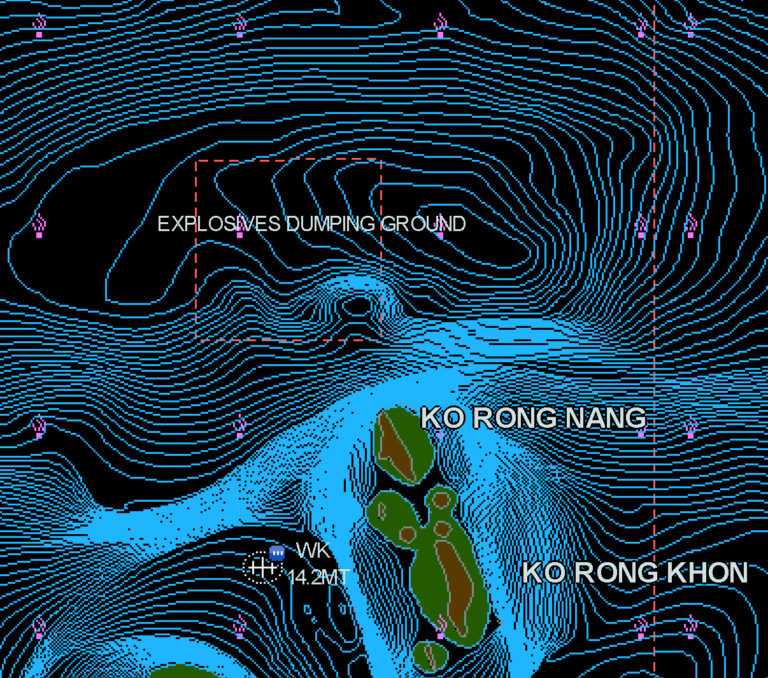
The world famous Samaesan Hole, often called “Silty Black Hole of Death”, is the deepest and most dangerous dive site in the the Gulf of Thailand. Located between Koh Samaesan and Koh Chuang, it drops down to 85m-100m. It is a former military ordnance dump site filled with unexploded ammunition, featuring extreme, unpredictable currents and poor visibility. To add to the fun, it is worth noting that it is in the middle of a busy commercial shipping lane. It features as one of Red Bulls most extreme dive sites in the world
2. SHARKFIN DEEP DROP – 85m
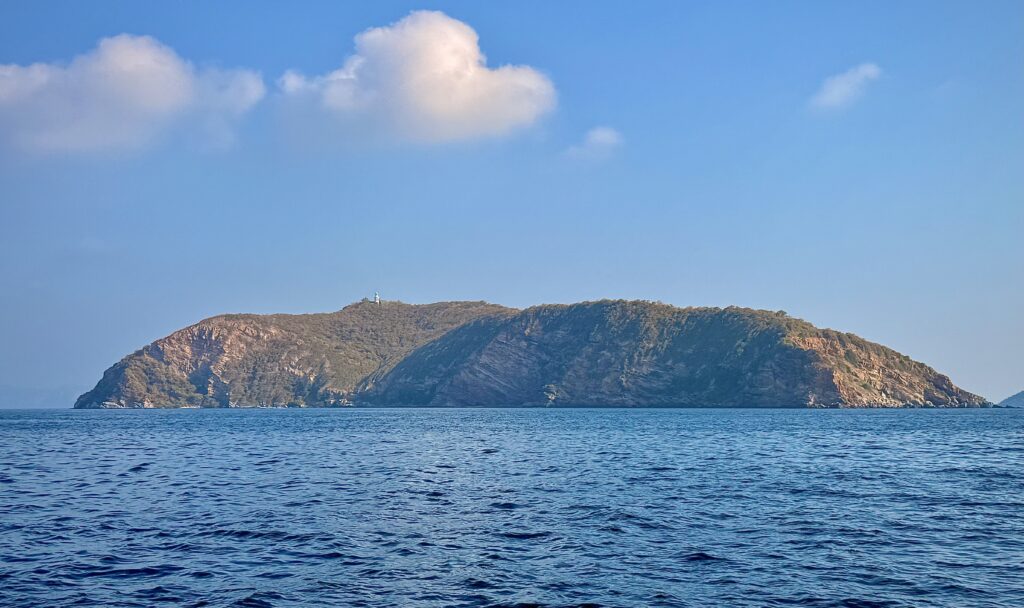
The Sharkfin Deep Drop, also referred to as the Samaesan Cliffs, is the second deepest dive site in the Gulf of Thailand. Situated west of the Samaesan Hole, this location features significantly richer marine biodiversity. With depths reaching 85 meters, it serves as an excellent environment for advanced Trimix training. Any one tec diving in Pattaya should visit this site

3. 1/4 MILE MOUTHPIECE DROP – 75m
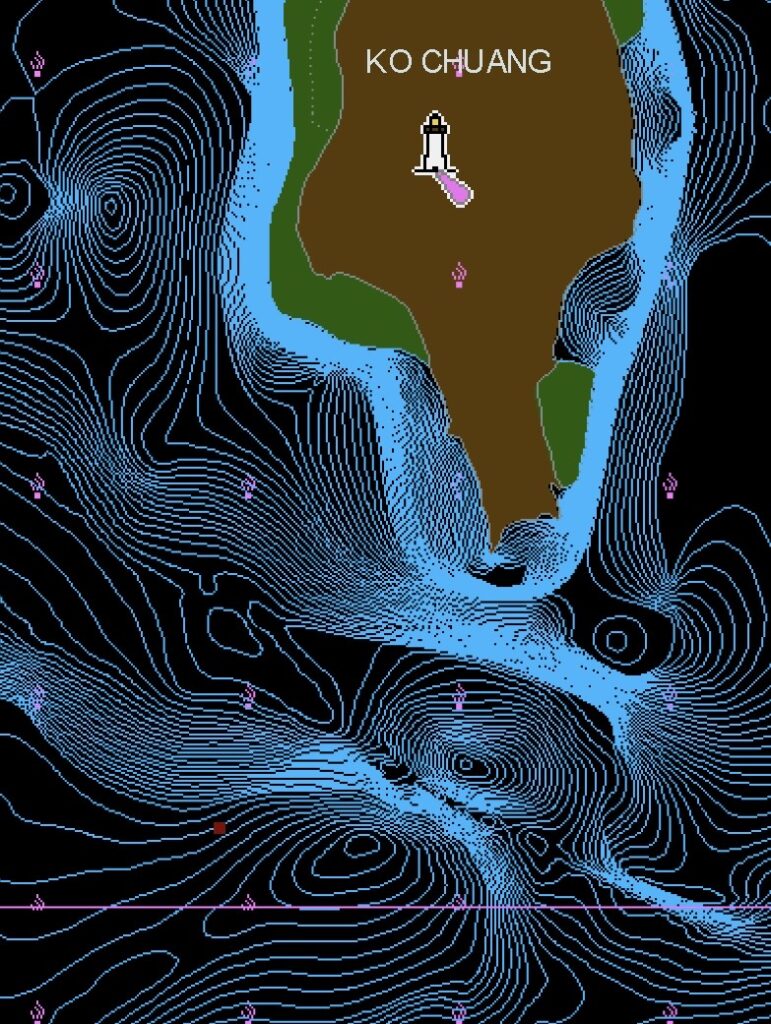
The 1/4 Mile Mouthpiece Drop is an exciting new technical dive site discovered in 2026. Situated to the south of Koh Chuang, this site plunges to an impressive depth of 75 metres, making it the third deepest dive site in the Gulf of Thailand. As it easily accessible by boat it makes an ideal location for divers seeking advanced Trimix training. The seabed here is predominantly flat and sandy, adorned with soft corals that provide a vibrant habitat for shoals of fish. This combination of depth, unique marine life, and challenging conditions makes the 1/4 Mile Mouthpiece Drop a standout destination for experienced divers looking to expand their skills.
4. Tattori Maru – 75m
The Tattori Maru, notorious for its role as a “hell ship” transporting POWs after the Bataan death march, was sunk by the USS Hammerhead in 1944 while carrying war supplies. Two torpedoes struck the vessel, causing severe damage and leaving the wreck at a depth of 75 metres, with the bow nearly detached from the main body. The ship’s grim history includes forcing prisoners into overcrowded holds, leading to illness and death, as well as an incident where a POW’s alert averted a torpedo strike. Today, the wreck stands as a haunting reminder of human suffering and endurance during wartime.
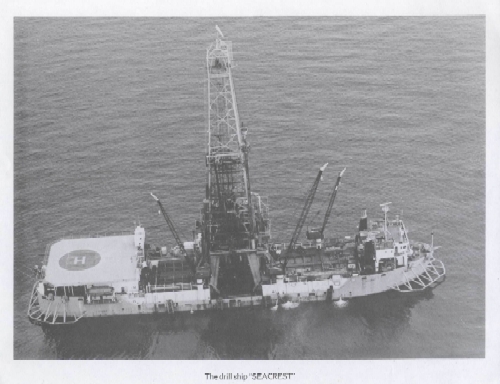
5. Drillship Seacrest – 73m
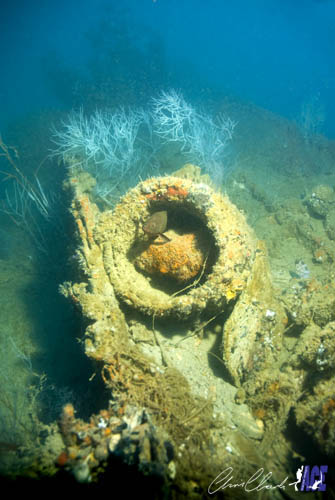
The Sea Crest, operated by Unocal for drilling and exploration, tragically sank after being struck by Typhoon Gay, resulting in the loss of 91 rig workers and leaving only 6 survivors. Prior to its final voyage, a 200-tonne top drive unit was installed, leading to concerns about the vessel’s stability that went unaddressed, and inadequate weather warnings were received due to radio issues. The wreck now lies on its starboard side, with clear evidence of protocol breaches, such as the disconnected pipeline. Legal action against Unocal was settled out of court, and the site remains a poignant dive, showcasing machinery and methods from the oil and gas industry of the era.
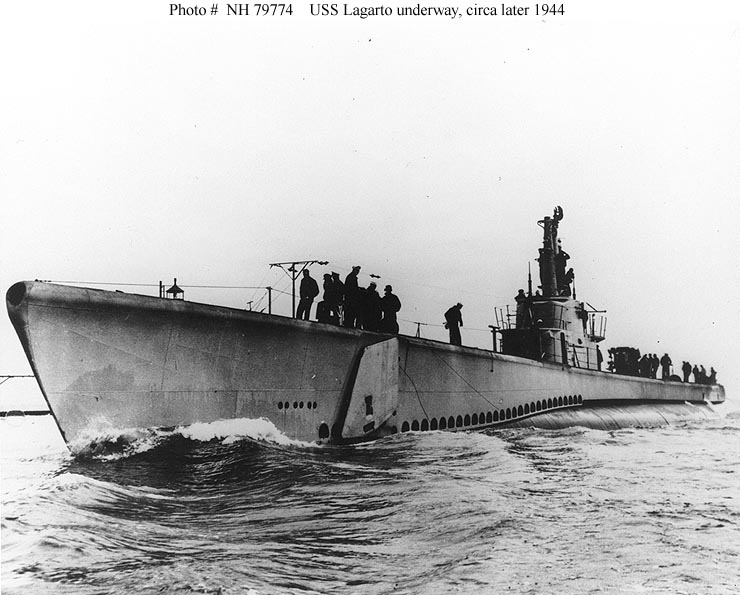
6. USS Lagarto – 70m
USS Lagarto, a Balao-class submarine built in Wisconsin, USA, was lost on 3 May 1945 while on patrol near Koh Losin, Thailand, after engaging enemy vessels alongside USS Baya; post-war records suggest it was sunk by Japanese minelayer IJN Hatsutaka, resulting in the loss of all 88 crew. The wreck lies upright at a depth of 70 metres, shows battle damage, and is regarded as a war grave with respectful commemorations. Lagarto, commanded by decorated officer Commander Latta, had a brief but notable service, including the sinking of Tatsumomo Maru and possibly the Japanese submarine I-371, before her loss during her second war patrol.
7. THUNDER BOWL – 65m
Introducing yet another exciting dive site for 2026! Situated to the west of Koh Samaesan and just north of Shark Fin Rock, this remarkable location is named after its distinctive ‘bowl’-shaped underwater terrain. Divers are often fascinated by the dramatic, booming noise that reverberates through the water when a commercial vessel passes overhead, giving the site its memorable name. Resting at a depth of 65 metres, it offers an excellent opportunity for Trimix divers who are eager to explore a bit deeper and experience a unique underwater environment, making it an ideal spot for those looking to broaden their diving horizons.
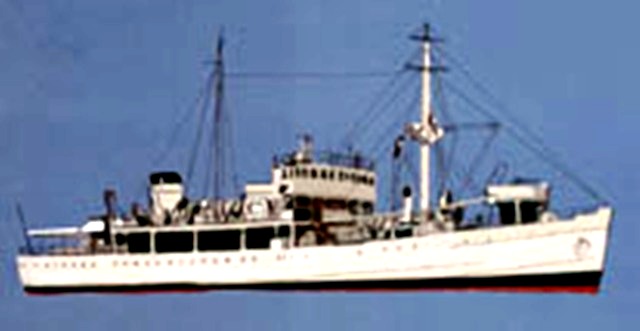
8. HTMS PANGAN – 65m
Located 60 nautical miles northeast of Koh Tao, this pre-1942 Japanese-built military transport ship sank in 1961 during a storm while disposing outdated munitions, with shifting cargo leading to its abandonment and the captain’s attempt to go down with her. The wreck sits upright but lists to port at a depth of 65 metres, with evidence of fire and structural damage contradicting the official sinking report. Notably, it once carried the body of a high-ranking officer after the Indo-China war, inspiring tales of haunting among Thai sailors. Today, the wreck offers excellent diving opportunities, with multi-level hulls, good visibility, and abundant photo spots.
9. NARCOSIS COLOSSEUM – 50m
Another exciting addition to the list of technical dive sites Pattaya for 2026! This site is positioned just south of Koh Chuang, with 1/4 Mile Mouthpiece Drop located immediately to its north. The dive site derives its name from the dramatic, colosseum-like circular slope that encircles the area, presenting steep sides reminiscent of an ancient amphitheatre. With a depth reaching 55 metres, it is ideally suited for extended range air diving and provides an excellent setting for narcosis management training, making it a prime spot for both adventure and skill development.
10. Koh Rong Nang Training Buoy – 50m
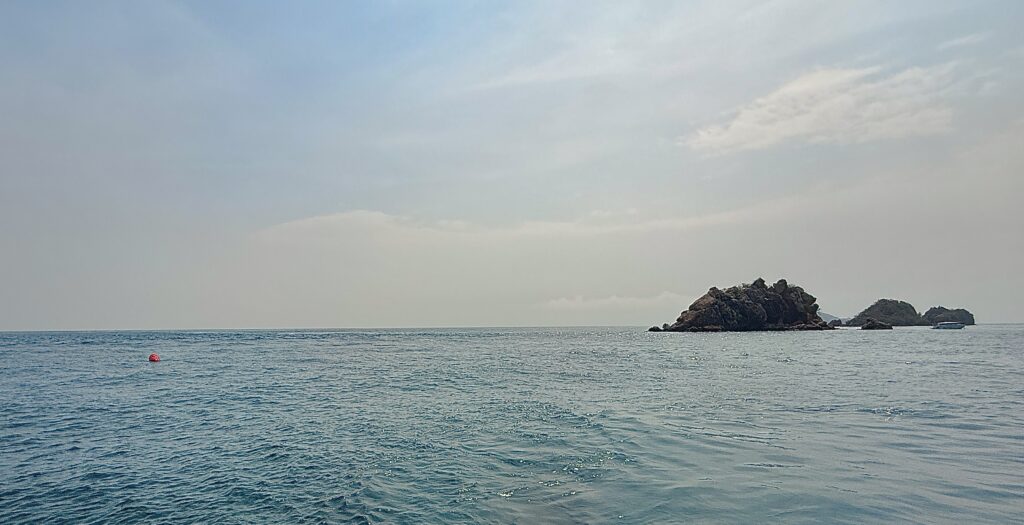
This site lies just north-east of Koh Rong Nang and south of the Samaesan Hole. It can easily be identified by an obvious orange buoy whose line descends down to 37 meters providing suitable conditions for various technical training courses. Due to strong currents often present at the site, divers are encouraged to practise their skills behind the substantial concrete blocks situated at the bottom of the line. Proceeding northeast, divers will encounter a distinct valley that slopes beyond 50 meters, leading into the Samaesan Hole, which reaches a depth of 95 meters. Don’t let the current pull you down unless you have planned this!
The Best Time for Technical Diving in the Gulf of Thailand
The technical dive season in the Gulf of Thailand is typically from November to April. Weather is typically cooler and calmer leading to improved sea conditions and better visibility (up to 20m). This coincides with the high tourist season so hotels and flights may be a bit more expensive.
Technical diving can be undertaken all year round however in the low tourist season (May to Oct) weather conditions are not typically great for diving. The seasonal monsoons bring wind and rain which ultimately means increased waves and poor visibility. You may be able to get a good deal on flights and hotels during this season but your dives may be cancelled or impacted. Just factor this in when deciding to go.